February 8, 2026
AI in Hardware Procurement Is Further Along Than You Think
And the teams using it are quoting faster, catching problems earlier, and missing fewer launch windows.

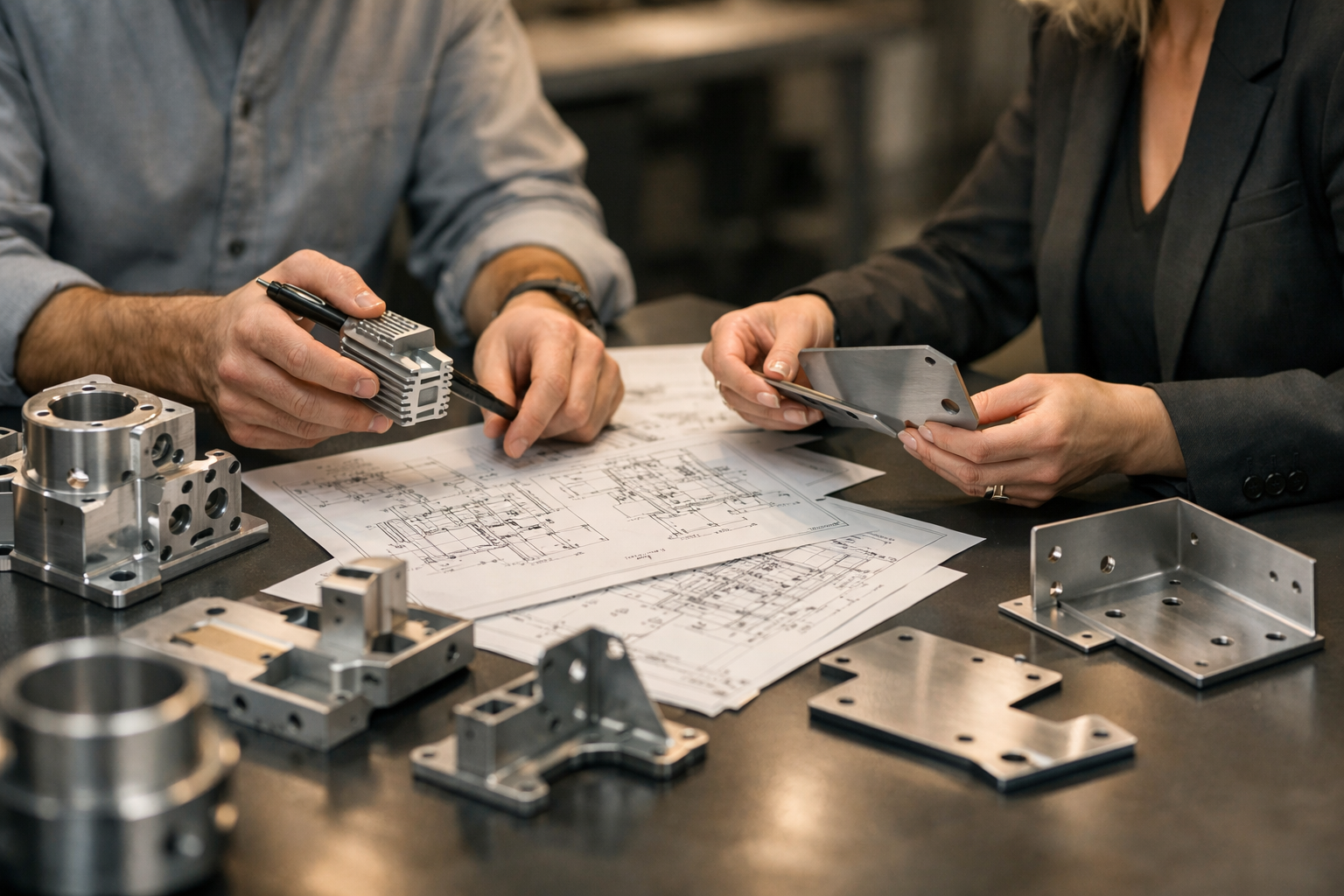
Picture this: It's 4pm on a Friday. You need a quote finalized before the weekend so manufacturing can kick off Monday. You open your inbox and there they are — 8 email threads with your vendors. One has "RFQ_v3_FINAL.pdf" attached. Another has "RFQ_v3_FINAL_revised.pdf." A third has just the subject line "Re: Re: Re: Re: Part specs?" and you have absolutely no idea what's in it anymore. You take a deep breath, pour a lukewarm coffee, and start reading from the top. This is the state of hardware procurement in 2026. And honestly? It doesn't have to be.
Let's be honest about what modern manufacturing procurement actually looks like for most teams. You need custom parts. You export a PDF and a native CAD file. You email five vendors. One replies in two hours, one replies in two days, one replies with the wrong part number, and one goes completely silent until you follow up — twice. Meanwhile, your engineer sent a design update directly to one vendor but not the others, so now you're comparing quotes that aren't even for the same part. The DFM feedback from your favorite machine shop? Buried in a reply-all chain that your colleague accidentally deleted.
Managing a product launch this way is like building a skyscraper using Post-it notes and group texts. Technically possible. Deeply unpleasant. Wildly inefficient. The uncomfortable truth is that most hardware teams have just... accepted this. The chaos feels normal because it's always been this way. But "always been this way" stopped being a good reason around the time we all got smartphones, GPS navigation, and same-day delivery. The tools have moved on. The email thread has not.
Here's where people tune out because they assume "AI in procurement" means some sci-fi system that replaces their entire team with robots. It doesn't. Think of it less like Terminator and more like that one incredibly organized colleague who never misses a deadline, never loses a file, and somehow always knows where the latest version of the drawing is.
In practical terms, AI is doing three things really well right now in hardware and manufacturing procurement:
Catching design problems before they become expensive surprises. AI-assisted design review can flag manufacturability issues — wall thickness, thread callouts, tolerancing — before your RFQ even goes out. That means fewer "sorry, we need to revise the design" moments three weeks into the quoting process, which is where real schedule pain lives.
Speeding up supplier selection and quote comparison. Instead of manually reading through vendor responses and building comparison spreadsheets, AI tools can analyze structured quote data, surface the best fit based on specs, lead time, and capacity, and flag anomalies. According to McKinsey, companies using AI-driven analytics have sped up supplier selection by 30%. That's not a rounding error, that's getting a week back.
Cutting the grunt work out of the process. AI can handle procurement tasks up to 80% faster when it comes to routine back-and-forth — status updates, follow-ups, document routing. One global manufacturing company deployed AI to automate invoice processing, reducing errors by 80% and cutting processing time by half. Less time chasing vendors. More time doing actual engineering.
None of this requires a data science degree. These are tools built for people who care about getting parts made on time, not people who want to learn Python.
This is the part where we gently apply some pressure. Sorry in advance. According to a recent survey, 78% of procurement leaders believe AI will disrupt the profession within 3–5 years. That's not a distant future problem — that's your next product cycle. Weekly use of generative AI within procurement functions increased 44 percentage points from 2023 to 2024, with 94% of procurement executives now using generative AI at least once a week.
Let that sink in. While you were managing 8 email threads on a Friday afternoon, 94% of procurement executives were already leaning on AI to do the heavy lifting. Organizations implementing unified procurement data and automation layers are reporting up to 25% increase in overall efficiency and 60% reduction in manual processes. That's not marginal improvement — that's the difference between a team that hits launch windows and a team that misses them.
The early adopters in your space are moving faster, quoting more accurately, and catching design problems upstream before they blow up timelines. The gap between them and everyone else is widening every quarter. You don't need to be first. But you probably shouldn't be last.
Most procurement software is built for the tidy, structured part of buying — purchase orders, invoices, contracts. It assumes everything upstream is already figured out. It is not.
ProcureBase is built specifically for the upstream chaos — the messy, collaborative, design-is-still-changing process that happens before a purchase order ever gets cut. Instead of email threads, you get project-based workspaces where your RFQs, CAD files, vendor quotes, and DFM feedback all live in one place, in one version, forever findable.
Your engineer and your machine shop can have the DFM conversation directly inside the platform — threaded, documented, and attached to the specific part revision it belongs to. No more "I think Dave mentioned something about that wall thickness on a call three weeks ago." It's right there.
Quotes come back in a structured format, so comparing them doesn't require a spreadsheet you built at midnight. Every revision is tracked. Every vendor communication has context. And when someone asks "what's the latest status on that bracket?"— you actually know. For hardware teams trying to move faster without adding headcount, that's not a nice-to-have. That's the whole game.
We're launching end of April. In the meantime: